Self Spreading Cure: Thinking Like an Oligarch
A self-spreading cure propagates through a population without consent, like a disease that happens to help you. Tonight's question is not whether this is possible: it's who gets to decide.
This is a philosophy cafe template. Bring it to a dinner, a bar, a book club. Deal the role cards, argue from a position that isn't yours, then drop it and say what you actually think.
Opening (5 min)
Welcome to a philosophy cafe with a premise: tonight, some of you get to decide what is good for humanity.
You have the resources. You have the connections. You have the vision that the general public — bless them — simply lacks the intellectual bandwidth to appreciate. You are not cruel. You are not reckless. You are, in fact, the only people in the room who understand the stakes clearly enough to act.
A self-spreading cure is a treatment that behaves like a disease — it replicates, transmits, and propagates through a population on its own. No injection for every person. No supply chain. No compliance required. You release it once and it finds everyone. The people it finds do not get a vote.
We already know how to build these. Some are in animal trials. One may have already been released.
To properly war-game this outlook, some members will be asked to take on the role of the plebs — the short-sighted, the risk-averse, the people whose myopic objections the oligarchs must anticipate, neutralize, and maneuver around. The plebs are not wrong. They are simply not in charge.
Structure:
-
Role cards: draw a card before each scenario, argue from that position like you own the room
-
Four scenarios, each with a real technology and real stakes:
- The Jews and their juice — how a small inflexible minority changes everything (Taleb)
- TIPs — a sexually transmitted cure for HIV
- Omicron — did someone already release one?
- The Apocalypse Mosquito — one gene drive to end malaria
-
Tactics — the operational playbook
-
Legal Lacuna — why none of this is currently a crime
-
Closing — it doesn't matter what we decide tonight
How This Works (5 min)
Before each scenario, deal the role cards face down. Read your card privately — do not reveal it.
- Argue. Make your case from your role's position. Don't break character. The group does not know who you are.
- Reveal. After everyone has argued, reveal your cards simultaneously.
- Teach. Each person explains their role to the group: who they were playing, what that character wants, and why they argue the way they do.
- Debrief. Drop the role. What do you actually believe?
The goal is not to win the argument. It is to understand, from the inside, how decisions of this magnitude actually get made — and why the people making them believe they are right.
Occasionally the host will claim a role before the deal to make a pre-researched point. Remaining cards are distributed as normal.
Note: The full role descriptions are listed in the next section for anyone who wants to read ahead. During the event, your card is your only reference.
Role Cards (pre-reading — not read aloud during the event)
The Utilitarian (1)
The benefits of acting outweigh the hypothetical risks of not acting. Push for deployment. Inaction has a body count too.
The Precautionist (2) (pleb)
You don't have a lab or a budget. You have a voice and a bad feeling. Irreversibility demands we wait — and you are the only one in the room saying it.
The Regulator (3)
You have the authority to approve or indefinitely delay. You will describe your hesitation as due diligence. You may be acting in the public interest, or you may be captured by the industry you oversee — but your language will be identical either way.
The Scientist (4)
Separate hype from reality. What does the research actually show? What don't we know yet? You follow the evidence wherever it leads, including to uncomfortable conclusions.
The Affected Community (5) (pleb)
You have no vote, no veto, and no advance notice. This will be done to your body, your ecosystem, your market, your culture. You will find out when it's already done. Speak anyway.
The Bioethicist (6) (pleb)
You have the most coherent argument in the room and the least power to act on it. Apply your frameworks — consent, autonomy, intergenerational justice — and watch the people with money and leverage ignore you politely.
The Security Analyst (7)
Focus on dual-use risk and second-order consequences. Who else has access to this capability, and what happens when it escapes the context it was designed for?
The Incumbent (plays it straight — never admits the real motive) (8)
Your industry, research institution, or career exists because this problem is unsolved. If the solution works, your livelihood disappears. You will argue against it using the language of safety, ethics, and precaution — but your actual concern is that success ends your business. You do not acknowledge this conflict of interest unless directly cornered.
The Innovation Hawk (9)
You represent DARPA, a sovereign wealth fund, or a national innovation mandate. Your job is to ensure your nation or institution leads on this — not because you're certain it's safe, but because capability is strategic advantage. If you don't develop it first, an adversary will, and you'd rather set the norms than inherit someone else's. You will never argue for stopping.
The Futurist (10)
Ignore the immediate debate. Extrapolate 50 years. What kind of world does this decision — in either direction — eventually produce?
The Engineer (11)
Strip away the ethics, the politics, and the money. Your job is to describe the minimum viable path to implementation for this specific scenario — the fewest steps required to make it real. What do you actually need? What is the hardest part? What is already solved? You are not arguing for or against. You are telling the room what it would actually take.
Scenario 1: The Jews and Their Juice
N x 1 min + 5 min
The Minority Rule (Taleb): A Harmless Warm-Up Example
Nassim Taleb observed that a small, inflexible minority can impose its preferences on an entire population — not through force, but through network economics. His example: kosher juice. If 5% of consumers will only drink kosher, it becomes cheaper for a manufacturer to make all their juice kosher than to run two separate production lines. The intolerant minority wins by default. The majority, indifferent, goes along without noticing.
This was made possible by infrastructure — the kosher certification system and the icon on the bottle. Without it, there is no way for the manufacturer to signal compliance, no way for the supply chain to verify, and no leverage for the minority. The icon is what allowed a small group's preference to normalize across an entire market.
This is the operating logic of self-spreading biologicals. A small group — a research team, a government agency, a single nation-state — makes one decision. The organism does the rest. The "preference" propagates across an entire population, human or animal, with no mechanism for the majority to opt out.
The self-spreading cure is the minority rule made biological.
Discussion
-
Utilitarian — The minority rule is elegant. One standard that works for everyone costs less than two. The majority gets kosher juice without noticing, and nothing bad happens to them. The outcome is efficient.
-
Precautionist — The majority never agreed to this. Preference cascades that the indifferent majority never notices are exactly how irreversible change happens without resistance. The juice is harmless. The next application may not be.
-
Regulator — Kosher certification worked because it had an icon, a standard, and an enforcement body. That infrastructure was built with consent and transparency. The question is whether the biological equivalent will have any of that.
-
Scientist — Taleb's model is descriptive, not prescriptive. Network economics explains how this happens — it doesn't tell us what the threshold is, how stable the equilibrium is, or what happens when the inflexible minority's preference is contested rather than ignored.
-
Affected Community — The majority didn't choose this. They were indifferent — but indifference isn't consent. If I had known, I might have objected. The system assumed my silence meant agreement.
-
Bioethicist — Autonomy requires the ability to opt out. The kosher example is trivial — the stakes are juice. Scale this to a biological intervention and the same mechanism produces a categorically different ethical situation.
-
Security Analyst — The minority rule has no directional constraint. It works equally well for a minority trying to help you and a minority trying to harm you. The infrastructure of invisible compliance is dual-use by design.
-
Incumbent — Kosher certification layered on top of existing supply chains without displacing them. A self-spreading biological standard would not. That is a different conversation entirely.
-
Innovation Hawk — The nation or institution that sets the standard first owns the infrastructure. Kosher certification is a geopolitical asset. Whoever controls the icon controls the market. Apply that logic to biological compliance standards.
-
Futurist — In 50 years the kosher juice scenario looks quaint. The question is what happens when the inflexible minority's preference is not dietary but genomic — and the icon is the organism itself.
-
Engineer — Taleb's mechanism requires three components: a sufficiently inflexible minority, a distribution infrastructure that can't bifurcate cost-effectively, and a majority that is genuinely indifferent. Identify which of these is absent in the biological case and you've found the point of intervention.
Scenario 2: Therapeutic Interfering Particles (TIPs)
N x 2 min + 10 min
Background
Leor Weinberger at the Gladstone Institutes / UCSF spent his career studying how HIV hides inside cells. His insight: HIV's own replication machinery could be turned against it.
Therapeutic Interfering Particles are engineered molecular parasites. They are stripped-down, modified versions of HIV — missing the pieces that cause disease, but retaining the pieces that hijack replication. When a TIP enters an HIV-infected cell, it competes with the real virus for the same machinery, crowding it out and cutting viral production by up to 1,000-fold.
The critical design feature: TIPs are built with an R0 greater than 1. They spread between people along the same transmission routes as HIV — including sexual contact. You don't need to vaccinate every person. The TIP finds the at-risk population automatically.
A single injection in animal trials (2024) reduced HIV levels 1,000-fold and held for 30+ weeks. Human trials are funded. DARPA ran a $40-50M program called INTERCEPT to develop TIPs for HIV, Ebola, Zika, and dengue. The US Department of Defense and NIH have both put money in.
The existing HIV antiretroviral industry is worth approximately $44 billion per year. It is built on patients taking daily medication for life.
Discussion
- Utilitarian — The transmission route is the feature, not the bug. It finds the at-risk population automatically. Results justify the method.
- Precautionist — TIPs are designed to co-evolve with HIV. We are releasing something engineered to mutate alongside a retrovirus indefinitely.
- Regulator — No informed consent framework exists for an invisible, sexually transmitted treatment. New law must precede first human trial.
- Scientist — 1,000-fold reduction held 30 weeks in primates. The R0 math works. The open question is long-term drift.
- Affected Community — People living with HIV were not consulted. This enters their bodies through their most intimate relationships without their knowledge.
- Bioethicist — Using sexual transmission as a delivery mechanism is a categorical violation of bodily autonomy, regardless of outcome.
- Security Analyst — DARPA built this. What happens when an adversary engineers a TIP that isn't therapeutic?
- Incumbent — The long-term safety data is insufficient. Ten more years of trials minimum. (actual concern: $44B market goes to zero)
- Innovation Hawk — If the US doesn't deploy first, someone else will — with fewer safeguards and no transparency.
- Futurist — In 50 years, HIV is a historical footnote. The question is what else spread alongside the TIP that nobody was tracking.

Scenario 3: Omicron
N x 2 min + 10 min
Background
Delta was killing people. Masks weren't working. The vaccines were losing the race against new variants. Lockdowns were destroying economies. Two years into the pandemic, every public health tool on the table was either ineffectual or politically unsustainable.
Then Omicron appeared. Within weeks it had outcompeted Delta globally. COVID became dramatically less deadly almost overnight. The pandemic effectively ended — not through policy, but through the virus itself becoming something people could live with.
Virologist Tony VanDongen tweeted that Omicron could read. It was a joke. The joke was the accusation — and it had to be a joke. At the time, social media platforms were algorithmically suppressing any claim that contradicted the official COVID narrative. Researchers were losing their jobs for saying things in public that turned out to be true. A direct statement — "this variant looks engineered" — would have been removed, and possibly ended a career. Framed as an absurdist observation about a virus that reads scientific papers, it could survive. The joke was a delivery mechanism for an idea that had no other way to travel.
Of Omicron's ~30 spike mutations, roughly 24 had already been characterized in published research — mapped by scientists in 2020-2021 as the exact changes most likely to increase transmissibility, enable antibody escape, and reduce lethality. The open virology community had published a wishlist. Omicron arrived with the wishlist fulfilled.
The probability of this happening by random chance — with no selection pressure — is approximately 1 in 10³¹. One in ten million trillion trillion. There are an estimated 10¹⁹ grains of sand on Earth. Blind luck requires odds a billion times worse than picking a specific grain from every beach on the planet simultaneously.
The official rebuttal is convergent evolution: under massive immune pressure, these mutations were inevitable because they are the only viable solutions. That argument is scientifically legitimate. It is also consistent with deliberate engineering. The two hypotheses produce identical evidence.
Where it appeared. Omicron was first detected in South Africa in November 2021 — a country mid-collapse, running rolling blackouts from a state power utility that can no longer keep the lights on, with a government too consumed by its own dysfunction to mount a coordinated public health response. No effective lockdown was possible. Contact tracing was aspirational. Genomic surveillance existed only because of foreign-funded university labs, not state capacity. If you were choosing a release point for something you wanted to spread before anyone could contain it, and you wanted the origin story to point away from yourself, a failing state on a different continent with limited investigative capacity is close to optimal.
The military angle. Any government biodefense division capable of engineering Omicron would also have known not to release it in March 2020. The risk/reward calculation only makes sense later — when Delta has emerged, when it is clearly more lethal than what came before, when every sanctioned intervention has failed, and when an attenuated competitor variant would be welcomed rather than investigated. You wait. You watch the conditions. You release when the alternative is worse. If this was deliberate, the timing was not reckless — it was disciplined.
In a world where the visible institutions fumbled for two years, a covert division of a government may have done the one thing that actually worked. We do not know that this happened. We cannot rule it out. And the institutions best positioned to investigate have not investigated.
Discussion
- Utilitarian — If it was engineered, it ended the pandemic. Millions of lives. Results matter more than process.
- Precautionist — We got lucky. A slightly different sequence and Omicron could have been worse than Delta. This was a coin flip at civilization scale.
- Regulator — No authority approved this. If deliberate, it was the largest unauthorized medical intervention in human history. The precedent is catastrophic.
- Scientist — Convergent evolution is legitimate science but doesn't close the door. The 10³¹ number is real. Two hypotheses, identical evidence.
- Affected Community — Billions were treated without consent. The outcome being good doesn't change what was done to us.
- Bioethicist — Intent and outcome are both morally relevant. A good result does not retroactively justify bypassing the consent of eight billion people.
- Security Analyst — If a government did this and it worked, they know it works. What is the next release, and what are its goals?
- Incumbent — Natural immunity from Omicron directly undermined the booster campaign and cost the vaccine industry billions.
- Innovation Hawk — This is proof of concept for deliberate attenuation at scale. We should formalize the capability before someone less careful does.
- Futurist — If a government did this once and it worked, this is now standard doctrine. Every future pandemic has a hidden response layer the public never sees.
Scenario 4: The Apocalypse Mosquito
N x 3 min + 10 min
Background
Mosquitoes are the deadliest animal on Earth. They kill over 700,000 people per year — 608,000 from malaria alone, mostly children under five, plus tens of thousands more from dengue, yellow fever, Zika, West Nile, and chikungunya. Every year. Every year for as long as humans have existed.
We now have a tool that could end this. One mosquito.
How CRISPR gene drives work. CRISPR-Cas9 is a molecular scissors system — it finds a specific sequence of DNA and cuts it. What Kevin Esvelt and George Church realized in 2013-2014 was that you could write the CRISPR machinery itself onto the genome alongside whatever change you wanted to make. The editing tool becomes part of the genome. Every time the cell reproduces, the tool copies itself to the other chromosome.
Normal inheritance gives each allele a 50% chance of being passed on. A gene drive approaches 100%. The modification doesn't just spread — it hunts down the unmodified copies and overwrites them.
Why target recessive alleles. The drive is engineered to disrupt a female fertility gene — but the disruption is completely recessive. One copy: the female is fertile, has no idea she carries the drive, passes it on at near-100% rates. Two copies: she is sterile. The drive spreads silently through the population, accumulating in heterozygous carriers, before females start becoming infertile. By the time the population feels the effect, the drive is already everywhere. There is no evolutionary escape route.
The timeline. In large cage studies, Anopheles gambiae populations carrying this drive crashed in 11 generations — approximately one year. Not reduced. Crashed. No survivors.
Kevin Esvelt, one of the inventors of the technology, subsequently became one of its loudest critics. He broke with scientific tradition by going public with his findings before building the first working system and calling for safeguards before the research proceeded. His reasoning: if a lab accident released an unfinished drive, it could spread globally before anyone noticed. The scientist who invented the apocalypse mosquito spent the years afterward trying to make sure no one used it carelessly — including himself.
Discussion
- Utilitarian — 700,000 dead every year. Every year we wait is 700,000 more. Caution at this scale is complicity.
- Precautionist — 11 generations to continental extinction with no recall. Per Bak: we don't know which grain collapses the pile. This may be it.
- Regulator — No international body has jurisdiction. A national release is a global decision made unilaterally. We need a treaty before a single mosquito is released.
- Scientist — Cage data is clean: 11 generations, no survivors. Ecological cascade modeling is the unknown. Esvelt — the inventor — says wait.
- Affected Community — This will be done to African ecosystems by institutions based elsewhere. African communities have no veto over the permanent alteration of their environment.
- Bioethicist — Intergenerational consent is structurally impossible. We are making irreversible decisions for people not yet born, on every continent.
- Security Analyst — Gene drive technology now exists in any well-funded lab. The apocalypse mosquito is also the apocalypse bee, the apocalypse crop pest, the apocalypse anything.
- Incumbent — The WHO malaria program, bed net manufacturers, and RTS,S vaccine developers need more time to evaluate impact. (actual concern: billions in funding and careers)
- Innovation Hawk — First mover sets the biosafety norms. Better a careful actor releases first than a reckless one.
- Futurist — In 50 years either malaria is gone and the ecosystem absorbed it, or we triggered a cascade nobody predicted. There is no middle outcome.
- Black ball (Bostrom) — This technology makes extinction-level ecological intervention accessible to any competent lab. Should Esvelt have kept his idea to himself?
Tactics
N x 2 min + 5 min
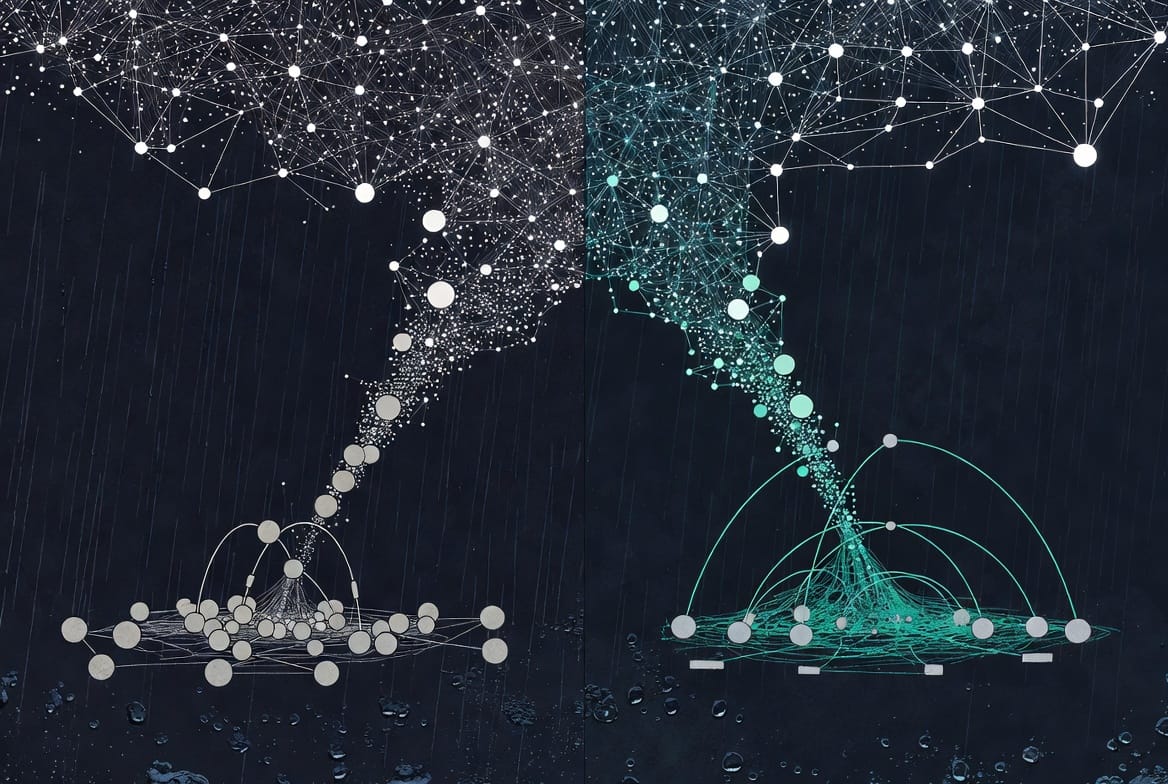
Draw a card to assign your role. Then pick a tactic from the lists below — or invent your own. Oligarchs argue how to advance or deploy a self-spreading intervention. Plebs argue how to detect, resist, or stop one. Every tactic below has a real example from tonight's discussion.
After everyone has presented their tactic, stop. Open discussion: who has the advantage — the oligarchs or the plebs?
Oligarch Tactics
Wait for the right moment.
Don't release when the cure looks optional. Release when the alternative is clearly worse and no one will ask hard questions. The risk/reward calculation changes completely when the incumbent solution is visibly failing.
Design for silent spread.
Engineer the effect to be invisible until it's everywhere. Target recessive alleles. Use transmission routes the population already accepts. By the time anyone feels it, the threshold is passed.
Use attenuated competition.
Release a weaker version of the threat to crowd out the dangerous one. Let the pathogen's own competitive dynamics do the work. Nobody releases a cure — they release something that looks like a variant.
Seed past the tipping point.
Release enough copies in enough locations simultaneously that self-sustaining spread is guaranteed. One release can fizzle. Enough releases cannot.
Design for deniability.
Make it indistinguishable from natural evolution. If the mutation profile matches what selection pressure would produce anyway, attribution is mathematically impossible.
Use open science as cover.
Publish the methods. Once the knowledge is in a hundred labs, no single actor can be held responsible for what anyone does with it. The literature becomes the alibi.
Exploit regulatory arbitrage.
Release from a jurisdiction with no oversight, or through a non-state actor. No treaty covers you. No authority has jurisdiction. By the time anyone builds the legal framework, the organism is on every continent.
Move in spaces nobody is watching.
The kosher juice didn't just spread — it spread while quality quietly degraded into sugar water and nobody noticed because nobody was looking at juice. Attention is the immune system of public discourse. Move in spaces below the threshold of scrutiny and you can reshape everything before anyone reacts. Move into a space where everyone is watching — vaccine mandates, GMO labeling, gain-of-function research — and expect maximum resistance from day one. The most effective self-spreading interventions in history happened in spaces the public considered too boring, too technical, or too remote to monitor.
Release far from yourself, in a place that cannot respond.
Choose a jurisdiction with no effective lockdown capacity, degraded public health infrastructure, and limited forensic genomics. The origin story points away from you. By the time the organism reaches countries with the resources to investigate, it has already spread past the point where containment matters and the question shifts from "who released it" to "how do we cope." A failing state is not just cover — it is a force multiplier. It cannot slow the spread even if it tries.
Call it a conspiracy theory.
If someone correctly identifies what you are doing, the fastest neutralization is not denial — it is ridicule. "I can't imagine that happening" is the public's default, and it works in your favour. Let them do the work of dismissing the evidence for you.
Pleb Tactics
Early detection.
Build surveillance systems sensitive enough to catch anomalous mutation profiles before spread is irreversible. The forensic genomics has to happen in real time — after R0 exceeds 1, you are already losing.
Whistleblower infrastructure.
The people closest to the lab know first. Protected, anonymous channels with real legal teeth are the earliest warning system available. No treaty catches what a scared researcher can.
Open attribution science.
Fund the forensic capability to distinguish engineered sequences from naturally evolved ones. Make deniability harder. The 10³¹ number only helps you if someone is doing the math.
Use the right model.
Compliance-dependent strategies fail against zoonotic agents — animals do not respect lockdowns. Identify the correct transmission model before designing the response. Fighting a COVID-class pathogen with a Polio-class playbook wastes the window you have.
Compete the release.
Release a counter-agent that outcompetes the original. This is itself an oligarch move — but it may be the only intervention that works once spread is underway.
International monitoring with teeth.
Unlike the Biological Weapons Convention, a treaty with actual verification and enforcement mechanisms. The window to build this closes every time a new lab acquires the capability.
Contain the knowledge.
Don't publish until safeguards exist. Esvelt's approach — and the hardest one, because it runs against scientific culture and career incentives. The question is whether the inventor owes the world the idea before the world is ready for it.
Legal Lacuna (optional)
5 min
There is no international criminal instrument that unambiguously covers the release of a self-spreading biological intervention — even one that causes catastrophic, irreversible, civilization-scale harm.
The existing frameworks all share the same gap:
- Biological Weapons Convention (1975) — covers weapons designed to harm. A "beneficial" release has no clear prohibition. The BWC has no verification or enforcement mechanism anyway.
- Cartagena Protocol on Biosafety — covers GMO releases but has no criminal enforcement.
- ICC crimes against humanity — requires intent to harm a civilian population. A well-meaning release with catastrophic unintended consequences probably doesn't qualify.
- Domestic bioterrorism law — requires intent to cause harm. A researcher who releases a gene drive to end malaria is not a terrorist by any current legal definition, even if the ecological consequences are extinction-level.
The closest concept under active development is ecocide — proposed as the fifth international crime at the ICC. A panel of international lawyers drafted a definition in 2021: "unlawful or wanton acts committed with knowledge that there is a substantial likelihood of severe and either widespread or long-term damage to the environment." A gene drive that collapses a continental food web fits that definition. It is not yet law.
The law assumes that civilization-scale interventions require state resources and therefore state accountability. That assumption expired around 2015, when CRISPR put gene drive capability within reach of any well-funded lab.
A self-spreading cure that ends a species, collapses an ecosystem, or alters the genome of every human on Earth can currently be released by a private actor with no applicable criminal charge waiting for them on the other side.
Closing Provocation (5 min)
The self-spreading cure is also the self-spreading mistake.
Kevin Esvelt published the gene drive idea before building it, called for safeguards, and got the reputation for conscience — while guaranteeing the capability spread to a hundred labs anyway. That is not restraint. That is the most elegant oligarch move of the entire evening.
The oligarch is not a special class of person. It is a mindset — to see the leverage point others miss, to plan the architecture of spread, and to dare to act without asking permission.
When you consider network theory, ethics are obsolete.
But taste is not. A good craftsman doesn't burn down the workshop. Build in an off switch — not as a concession to ethics, but because clean work is its own reward.
The philosopher Nietzsche called this The Will to Power.
Format: Open discussion after each section. No slides. No wrong answers.
Sources and further reading available on request.
Before you start, count the number of people in the room and calculate your running times using the formulas on each section header (N = number of participants). Add up the sections you plan to cover and check whether they fit within your available time. Decide in advance which sections to cut if you are running short --- Legal Lacuna is the designated sacrificial section, but Scenario 1 can also be shortened to a pure monologue with no discussion if needed.
Materials to bring:
* A printed copy of this document to reference as you move through the program (or a link to this document on your phone or computer)
* A set of recipe cards, one per role, with the role name, number, and a one-line description written on each. Laminate them if you plan to reuse.
Optional roles to assign before you begin (for larger groups):
* Timekeeper: watches the clock and calls time on anyone running long. Gives the host cover to move the discussion forward without being the villain.
* Secretary: writes down anything said during discussion that goes beyond what is already in the playbook. New arguments, new examples, new objections. This is how the document improves over time.